Published on:
Updated on:

Ibogaine Alkaloid Benefits

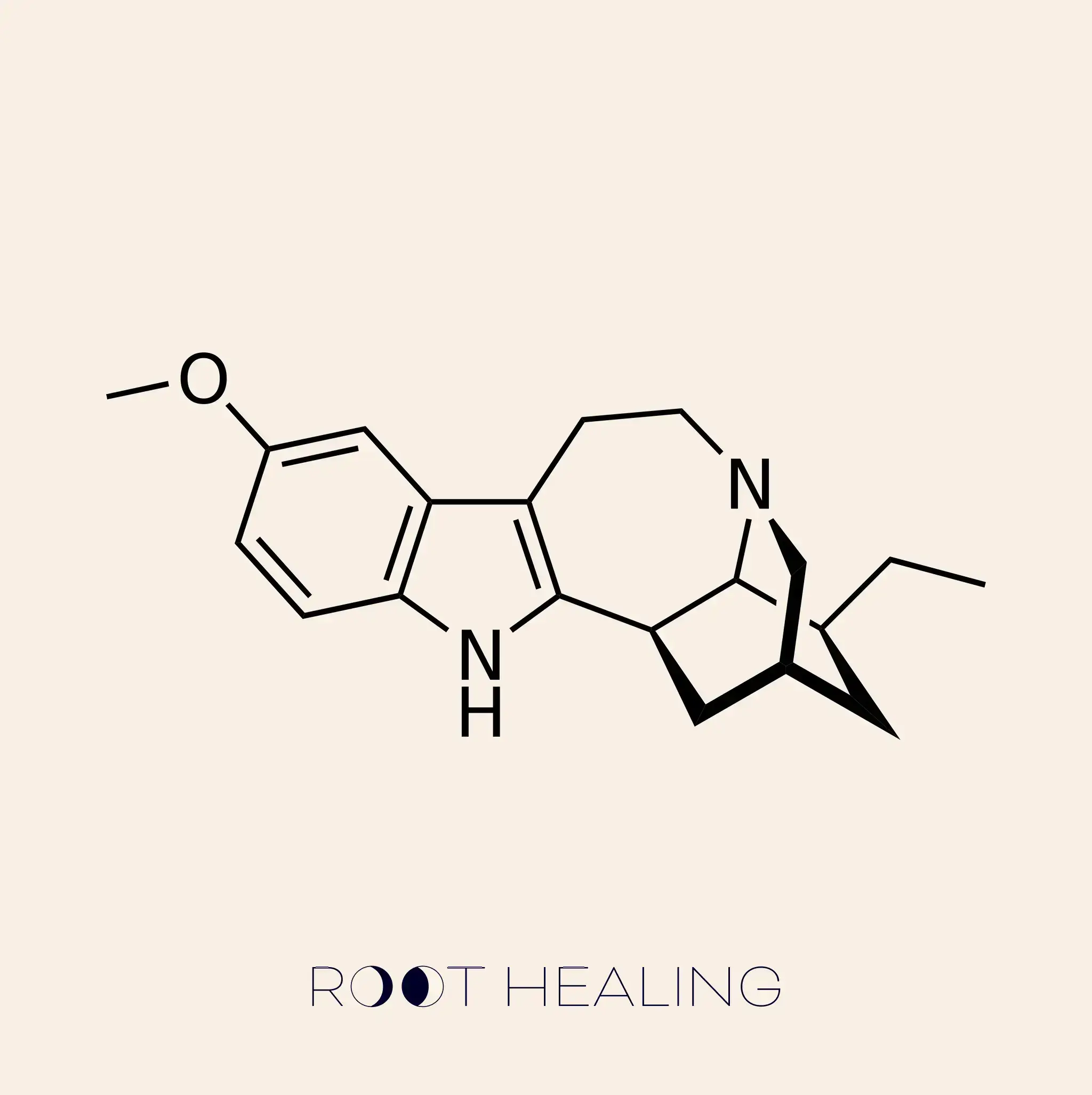
Ibogaine alkaloid.

Ibogaine is a natural alkaloid extracted from the root of the Iboga plant (Tabernanthe iboga), native to Western Africa. It was first discovered by the Babonga and Bwiti people, who used it in spiritual rituals for its psychoactive properties. In small doses, Ibogaine acts as a mild stimulant, while in larger amounts, it produces profound psychedelic effects.

Research on Ibogaine began in 1962, with early case studies reporting successful treatment of addictions to heroin, cocaine, morphine, amphetamines, and alcohol[^1].

Today, scientists are studying Ibogaine for its potential to:

  • Attenuate addiction and withdrawal
  • Improve mood and reduce depression
  • Enhance neuroplasticity
  • Offer antimicrobial and antiviral effects

One of the most compelling aspects of Ibogaine is that a single dose can lead to long-lasting suppression of drug- and alcohol-seeking behavior.

Overview of Ibogaine Benefits

Ibogaine affects multiple neurotransmitter systems in the brain:

  • Dopamine transporters
  • N-acetylcholine receptors
  • Serotonin transporters
  • NMDA receptors

Addiction and Withdrawal

Ibogaine blocks dopamine transporters, raising dopamine levels and helping to normalize the dopamine system, which is often dysregulated in addiction[^2]. It also inhibits N-acetylcholine receptors, further disrupting the neurochemical cycle of addiction[^3].

Mood and Anxiety

Ibogaine increases serotonin levels by inhibiting its reuptake, which may explain its antidepressant and anxiolytic effects[^4].

Psychedelic Effects

The compound’s ability to block NMDA receptors is responsible for its hallucinogenic properties[^5].

Neuroplasticity and Neural Remodeling

Ibogaine stimulates neuroplasticity and the remodeling of neural circuits—key elements in long-term recovery from addiction.

One animal study found that Ibogaine enhances the activity of:

  • BDNF (Brain-Derived Neurotrophic Factor)
  • NGF (Nerve Growth Factor)
  • GDNF (Glial Cell-Derived Neurotrophic Factor)[^6]

These growth factors support neuron survival and stimulate the formation of new synapses. Other studies confirm that BDNF and GDNF can remodel nerve tissue[^7], and BDNF may also promote neurogenesis in adults[^9].

Attenuating Addiction and Withdrawal Symptoms

Ibogaine’s metabolite, Noribogaine, has shown efficacy at doses up to 180 mg, reducing withdrawal symptoms with minimal side effects such as nausea and mild hallucinations[^10].

Several studies support Ibogaine’s effectiveness:

  • A single 200 mg dose eliminated addiction symptoms in some participants[^11].
  • In a trial of 30 treatment-resistant patients, addiction scores improved significantly for up to 12 months[^12].
  • Among 88 addicted individuals, 54% remained abstinent for a year, and 30% never relapsed[^13].

Mood, Depression, and Anxiety

Ibogaine shows promise as an antidepressant, thanks to its serotonin-enhancing effects[^14]. Even in cases of unsuccessful detoxification, participants reported mood improvements[^15][^16].

Some individuals were able to discontinue antidepressants after Ibogaine therapy. However, the benefits seem limited to those with underlying psychiatric conditions. Healthy individuals experienced only mild changes in mood[^17].

Ibogaine and PTSD

About 8% of Americans experience Post-Traumatic Stress Disorder (PTSD)[^18]. Standard treatment often involves SSRIs.

Ibogaine may provide an alternative by raising serotonin levels and inducing a transformative psychedelic experience.

A study involving 65 US Special Operations Forces veterans found major reductions in:

  • Suicidal ideation
  • Cognitive impairment
  • Depression
  • Anxiety
  • PTSD symptoms[^19]

The participants also reported profound personal and spiritual insights.

Antimicrobial and Antiviral Properties

Ibogaine also has potential antimicrobial and antiviral properties:

  • Antibacterial: Effective against Mycobacterium tuberculosis[^20]
  • Antiviral: Inhibits HIV replication in vitro[^21]
  • Antifungal: Blocks Candida albicans infection enzymes and improved survival in infected mice[^22][^23]

However, these effects are mainly based on laboratory studies. More clinical research is needed.

Risks and Future Directions

While Ibogaine offers exciting possibilities, it also carries risks:

  • Cardiotoxicity: High doses can block potassium channels in the heart, potentially causing arrhythmias or cardiac arrest[^24].
  • Contraindications: Not recommended for those with preexisting heart conditions.

Ibogaine is currently classified as a Schedule I substance in the USA, Australia, and parts of Europe. However, it remains legal in Canada, Mexico, and other countries where it is used in therapeutic settings.

Next-Gen Ibogaine: Safer Analogs

Researchers are developing analogs that retain the benefits without the risks:

  • 18-Methoxycoronaridine (18-MC)
  • Tabernanthalog (TBG)[^25][^26]

These do not affect potassium ion channels, reducing cardiac risks. However, they lack the spiritual and introspective aspects that many believe are crucial for addiction recovery.

Final Thoughts

Ibogaine is a powerful, complex medicine. With proper supervision, it has the potential to:

  • Treat addiction with lasting results
  • Improve mental health
  • Enhance neuroplasticity

For those with heart conditions, analogs may be the safer choice. But for others, combining detoxification and spiritual healing through supervised Ibogaine therapy may be the key.

If you're interested in exploring Ibogaine therapy or want to learn more about our Iboga-Assisted Detox Retreat, feel free to reach out.

References:

  1. https://pubmed.ncbi.nlm.nih.gov/11705114/
  2. https://pubmed.ncbi.nlm.nih.gov/22451652/
  3. https://pubmed.ncbi.nlm.nih.gov/11906717/
  4. https://pubmed.ncbi.nlm.nih.gov/11303040/
  5. https://pubmed.ncbi.nlm.nih.gov/7473163/
  6. https://www.frontiersin.org/articles/10.3389/fphar.2019.00193/full
  7. https://www.degruyter.com/document/doi/10.1515/REVNEURO.1997.8.1.1/html
  8. https://journals.sagepub.com/doi/10.1177/0269881107078491
  9. https://pubmed.ncbi.nlm.nih.gov/9675054/
  10. https://pubmed.ncbi.nlm.nih.gov/27870477/
  11. https://www.tandfonline.com/doi/full/10.1080/00952990.2017.1310218
  12. https://www.tandfonline.com/doi/full/10.1080/00952990.2017.1320802
  13. https://pubmed.ncbi.nlm.nih.gov/30272050/
  14. https://pubmed.ncbi.nlm.nih.gov/7596224/
  15. https://www.tandfonline.com/doi/full/10.1080/00952990.2017.1310218
  16. https://pubmed.ncbi.nlm.nih.gov/11085338/
  17. https://pubmed.ncbi.nlm.nih.gov/27180314/
  18. https://pubmed.ncbi.nlm.nih.gov/16018133/
  19. https://journals.sagepub.com/doi/10.1177/2470547020939564
  20. https://pubmed.ncbi.nlm.nih.gov/9626931/
  21. https://pubmed.ncbi.nlm.nih.gov/15386189/
  22. https://cdnsciencepub.com/doi/10.1139/W08-029?mobileUi=0&
  23. https://pubmed.ncbi.nlm.nih.gov/15947429/
  24. https://pubmed.ncbi.nlm.nih.gov/22458604/
  25. https://www.ncbi.nlm.nih.gov/pmc/articles/PMC2600595/
  26. https://www.nature.com/articles/s41586-020-3008-z
FAQ's

Ayahuasca vs. Iboga or Ibogaine

Which is stronger, Iboga or Ayahuasca?

Both are powerful master plants, but they work in fundamentally different ways. Iboga produces a deeper, longer, more singular experience — a single ceremony unfolds over the course of a day and delivers insights that integrate for years. Ayahuasca offers shorter, cyclical journeys (4–6 hours) that most participants repeat many times over a lifetime. Strength depends on what you're seeking: Iboga's depth and durability, or Ayahuasca's ongoing visionary dialogue.

Should I do Iboga or Ayahuasca First?

There is no universal answer, but the two medicines tend to serve different purposes. Ayahuasca is typically worked with over many ceremonies as an ongoing path of exploration and teaching. Iboga, by contrast, is generally a complete healing in itself — most people do not need further plant medicine work for healing afterward, and any continued ceremony tends to be for exploration rather than resolution. If you are seeking lasting resolution to a specific pattern such as addiction, trauma, or behavioral compulsion, Iboga is generally the more direct path.

Which is more effective for addiction — Iboga or Ayahuasca?

Clinical research points to ibogaine as the most-studied direct intervention for substance use. In one of the largest trials, 30% of 88 participants completely eliminated their addiction after ibogaine therapy and 54% remained abstinent for more than a year. Ayahuasca shows anti-addictive properties in research but typically requires sustained, repeated ceremony work.

Importantly, research has also documented anti-addictive activity in the other principal Iboga alkaloids — coronaridine, ibogamine, and voacangine — which together with ibogaine are referred to in the research literature as the "CIVI-complex." At Root Healing, our experience confirms what the Bwiti have held for thousands of years: whole-plant Iboga is the most effective path, because its full spectrum of alkaloids works synergistically. This is why our work is rooted in Iboga itself, supported by ibogaine-grade safety protocols and boutique, lineage-led care.

Is Iboga safer than Ayahuasca?

Each has its own risk profile. Ayahuasca is generally well tolerated but interacts dangerously with SSRIs, certain medications, and tyramine-rich foods. Iboga requires more rigorous medical screening — particularly cardiac and liver function — because it can prolong the QT interval. With proper screening and medical oversight, Iboga is very safe. At Root Healing, we hold ibogaine-grade safety protocols, including continuous EKG monitoring throughout ceremony, alongside our boutique, lineage-led care.

How long does an Iboga ceremony last compared to an Ayahuasca ceremony?

An Ayahuasca ceremony typically lasts 4–6 hours. An Iboga ceremony is significantly longer, generally unfolding over the course of a day, with an extended visionary phase followed by a long reflective integration period. The duration of healing also differs: Ayahuasca's benefits generally last 1–2 months and are reinforced through repeated ceremonies, while Iboga's effects often last from many months to a lifetime, with most people completing their core work in 1–3 ceremonies.

Why does Ayahuasca require so many more ceremonies than Iboga?

Ayahuasca teaches through symbolic, visionary experience that takes time to decipher and can fade with daily life, which is why ongoing ceremony is part of the tradition. Iboga delivers direct, unambiguous insight into a person's patterns, behaviors, and relationship with self. Because these realizations are concrete rather than symbolic, they integrate more durably, and most people complete their foundational work in 1–3 ceremonies.

How do I know whether Iboga is the right medicine for me?

Iboga tends to call those ready for direct, grounded clarity — people seeking lasting resolution rather than open-ended exploration. It is often chosen for substance use, behavioral addiction, trauma, neurological conditions, or a felt disconnection from self and life. Those drawn primarily to visionary, symbolic experience may resonate more with Ayahuasca, and we hold deep respect for that path. For those seeking a complete, lasting healing rooted in an ancient tradition and supported by modern research, Iboga is uniquely suited. Our application and medical screening process at Root Healing help us assess alignment together.

Where are Iboga and Ayahuasca legal?

Ayahuasca is legal in Brazil, Peru, Ecuador, and Costa Rica, and is permitted in the United States only within specific religious exemptions. Iboga and ibogaine are legal in Mexico, Costa Rica, Brazil, South Africa, Gabon, New Zealand, and the Netherlands, among others. In the United States, ibogaine is federally Schedule I, though sacramental Iboga ceremonies are protected within recognized religious traditions. Root Healing operates retreats in Mexico (our flagship center in Tepoztlán), the United States (through the Missoko Bwiti Alliance, our 501(c)(3) church entity in Oregon), and Europe — each within the appropriate legal and traditional framework.

What are the cultural and spiritual origins of Iboga and Ayahuasca?

Iboga is the sacrament of the Bwiti tradition of West-Central Africa, centered in Gabon, Cameroon, and the Democratic Republic of the Congo. Bwiti is one of the oldest continuous spiritual lineages on earth, and Iboga is regarded as the master plant that initiates a person into truth, ancestry, and self. Ayahuasca originates with indigenous tribes of the Upper Amazon Basin — Peru, Brazil, Colombia, and Ecuador — where shamans, or ayahuasqueros, prepare it ceremonially with icaros (sacred songs) and visionary work. Both are profound traditions; Root Healing's work is rooted specifically in the Missoko Bwiti lineage, in direct relationship with our Bwiti elders.

Do Iboga and Ayahuasca cause purging?

Both can, but in different ways. Ayahuasca is well known for la purga — vomiting, diarrhea, sweating, and emotional release that is traditionally understood as the medicine clearing what no longer belongs. Iboga can also produce nausea or vomiting, particularly as the body releases stored substances or trauma, though this is generally less central to the experience than with Ayahuasca. With Iboga, the deeper "purge" is psychological and emotional — a clarifying release of patterns, dishonesty, and dissonance with the self. At Root Healing, our medical team and traditional facilitators support participants throughout to ensure both safety and ease.

Can Iboga and Ayahuasca help with depression and anxiety?

Both have shown therapeutic potential, but Iboga offers a more comprehensive path for depression and anxiety. Pharmacologically, Iboga works on a broader range of neurotransmitter systems than Ayahuasca — modulating dopamine, serotonin, and acetylcholine, while activating sigma-1 receptors and upregulating key neurotrophic growth factors including GDNF and BDNF. This combination supports mood regulation, nervous-system resilience, and long-term neuroplasticity in ways that Ayahuasca's primarily serotonergic (DMT-driven) mechanism does not fully reach. Clinical research reflects this depth: studies have reported significant reductions in depression after ibogaine treatment, and one PTSD trial documented relief from anxiety, cognitive impairment, and suicidal ideation in all 51 participants.

Equally important is what comes alongside the medicine. The Missoko Bwiti tradition that holds Iboga is itself a complete framework for working with depression, anxiety, and emotional disconnection — offering ceremony, ancestral connection, and a way of relating to the self that integrates the insights of the medicine into daily life long after retreat. At Root Healing, this lineage-led care is woven through every stage of the journey, from preparation through retreat to post-retreat integration, which is where lasting healing for depression and anxiety is most often built.

Can you microdose Iboga or Ayahuasca?

Microdosing Iboga is a recognized practice within the Bwiti tradition and in modern wellness contexts, where small daily or periodic doses of root bark are used to support clarity, focus, mood, and gentle neuroregenerative effects. Ayahuasca is generally not microdosed in the same way, as its effects depend on the synergy between DMT and the MAOI in the brew, which becomes complicated at sub-perceptual doses; some practitioners microdose the Banisteriopsis caapi vine alone for its mood and nervous-system benefits. At Root Healing, microdosing is approached with the same care as full ceremony — aligned with tradition, supported by science, and never a substitute for full healing work when that is what is called for.

Connect

If you have any questions about our programs, let us know and we will be happy to help you.

Thanks for connecting with us!

As a small, heart-led team experiencing a high volume of inquiries, we must focus our personalized correspondence on those who have completed our Application Form. This form helps us ensure medical safety and alignment for the path ahead, but also helps us understand your needs better.
Once you submit your application, we will review it thoughtfully and personally reach out to guide you through the next steps.
If you don't hear from us right away, please know we are carefully working through requests in the order they were received. We appreciate your patience and your sincere interest in our community.
Application Form
Thank you for connecting with us!  If you would like to get started with our process, please complete the following Application:  USA
Application Form
Thank you for connecting with us!  If you would like to get started with our process, please complete the following Application:  Europe
Application Form
Thank you for connecting with us!  If you would like to get started with our process, please complete the following Application:  Mexico
Application Form
Oops! Something went wrong while submitting the form.
Thank you! Your submission has been received!
Something went wrong while submitting the form. Please try again.
Stylized illustration of a traditional Bwiti ceremonial mask with intricate details.